Creating fresh content for your vacation rental website doesn’t have to mean reinventing the wheel. In fact, some of the most effective blog posts are the simplest — stories, photos, and experiences that show guests exactly what it’s like to stay at your property and explore the surrounding area.
Below are 24 blog post ideas you can rotate through all year long. Many of these can become recurring series, seasonal features, or even social media content — helping you get more mileage out of every post.
Show Off Your Property
1. A Photo Tour of Your Vacation Rental
Create a short visual walkthrough of your home, or spotlight one room or property at a time. This works especially well as a monthly series and helps guests picture themselves staying with you.
2. A Video Walkthrough of Your Rental
Film a guided tour of the interior of your home. Focus on layout, light, and comfort — and avoid filming identifying exterior details for privacy and security.
3. Feature Each Bedroom
Dedicate a post to each bedroom, highlighting views, natural light, bed types, linens, and the overall vibe. This helps guests choose the room that best fits their needs.
4. Highlight the Kitchen
Show how your kitchen supports real stays — from coffee mornings to family dinners. Mention appliances, cookware, and space to gather. One often-overlooked detail on listings is the type of coffee maker in the home. This is super important to most coffee drinkers, and they might need to know before making it to your town, or at the very least, before heading to the rental once in town. For example, if your house is in a rural area, and people must drive a long distance to get to the home from town, those guests probably will not want to go back into town for coffee, after checking in at 4. Do what you can to make the guest’s stay and the shopping and preparation for it easy as possible.
5. Spotlight the Master Bathroom
Luxurious bathrooms sell stays. Highlight soaking tubs, tile work, lighting, and plush towels with descriptive storytelling. Guests often book homes that are at least slightly better than their own, and bathrooms are one of the things that really grab their attention.
6. Feature the Backyard or Outdoor Space
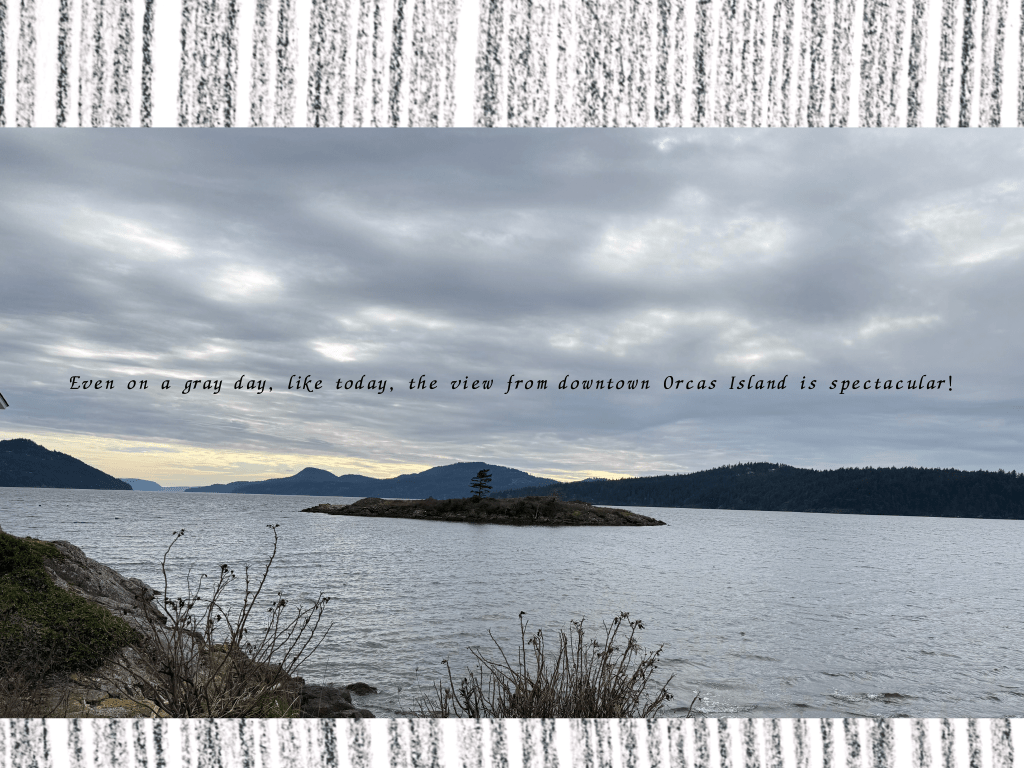
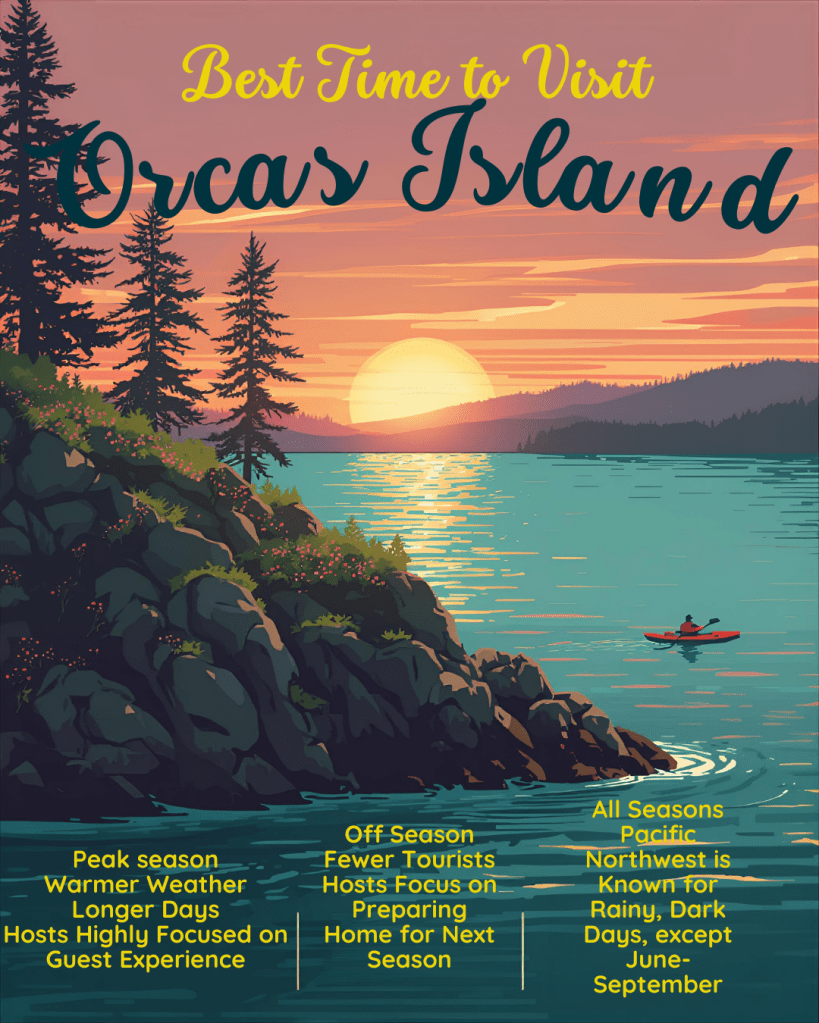
Pools, patios, fire pits, gardens — outdoor areas are often a deciding factor. Use photos or video to show how guests can relax outside. This can be a major selling point for your short-term rental, so be sure that you cover whether your Orcas Island rental has a hot tub, or your Phoenix rental has a pool. Your guests will want different things, depending on the area in which they stay. When featuring the outdoor space, remember to let guests know if some amenities are only availabe during certain seasons.
For example, one of the houses I manage on Orcas Island has the perfect backyard for entertaining, but the rainy time of the year is not a desirable time to sit on an uncovered porch, and the rain ruins his seat cushions, so they are only available during the spring and summer months. Obviously, we don’t take photos of the outdoor space without the cushions on them, but there is plenty of verbiage in the listing to let guests know what to expect.
Share Guest Experiences
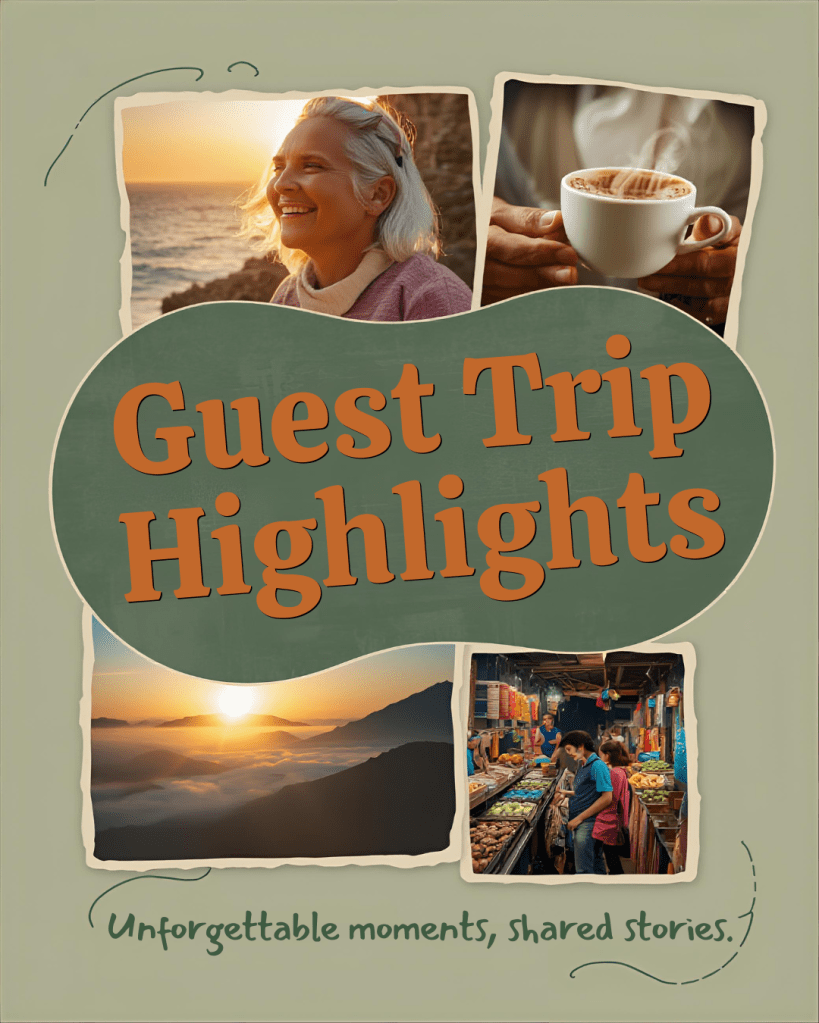
7. Guest Trip Highlights
Ask guests to share one thing they loved most about their stay or the area. Compile these into a feel-good post that also highlights local attractions. For example, one of my clients owns the only bicentennial farm on Orcas Island, his home is one a few waterfront properties with a flat path to the beach, and he has a wedding venue that is often used by celebrities.
Compile your best reviews, and don’t be afraid to take a picture of your handwritten guest book when you host that amazing wedding on your property. This sets you apart from the rest. Handwritten sentiments evoke more emotion than typed ones, and a picture of the handwritten praise of your rental is a great addition to your social media and blog.
8. Guest Photos from Their Stay
Invite guests to submit photos (with permission). These authentic images build trust and double as social media content. Using the example above, when my client with the wedding venue hosts celebrity weddings, photos are posted on his wedding venue site, showcasing what the property can be used for. Use the photos and videos that make your listing shine!
9. Feature Your Best Reviews
Turn glowing reviews into a blog post or short video. Group them by theme — comfort, location, amenities, or hospitality.
10. The Worst Review You’ve Ever Received
Tell a transparent, human story about a tough review — and how you handled it. This builds credibility and shows professionalism. Try to avoid skirting responsibility for the issues in your home. Own them, and let your prospects know that you did what you could for your guests to make things right, and that the issues have been fixed.
Tell Your Story as a Host
11. Why You Love Hosting Guests
Share what motivates you as a host and the experience you aim to create. Guests book people as much as properties. For me, I am motivated by the promise that getaways hold- you can completely change your life during the course of a 5-day stay. I try to recreate my best travel memories for my guests, when possible.
For example, my 2 best vacations are my favorites for different reasons, and the type of vacation varies. My favorite solo trip was to Maui, Hawaii. But, my favorite family trips are tied- 2 different Disney cruises, taken with my ex’s family, hold the top spot for family trips.
These two trips showed me the potential of a vacation, and that drives me to create positive guest experiences for my guests.
12. How Your Vacation Rental Began
Tell the origin story of your rental — why you started, what inspired you, and how it’s evolved. For example, is your home newly built? Is it a historic home? Was it originally a family home that you now host families in? Why?
Doing this also gives you the opportunity to sell your experience as a family experience, especially if you have some negative reviews on the house. For example, one of the homes I manage had a flood of negative reviews recently because many guests, one after the other, said the house was creepy and they immediately left upon arrival because they thought it was haunted.
This house does better when guests know up front that it is a no-frills experience in a rustic cabin on the waterfront. While it might have been easier to get bookings if the online photos of the home didn’t include the hallway full of family photos, which is one of the first things guests see upon entry, it is better for guests to know up front what they are getting. Do what you can to accurately reflect the state of your rental, and it will make a huge difference!
You may be asking why the hallway is full of family photos. After all, it’s a vaction rental. The hallway is full of family photos because the home was originally built and lived in by my client’s mother, who then made it into a Bed and Breakfast with access to the whole home, and the mother delivered meals to the guests, while staying at her sister’s house on an adjoining property.
The home was offered that way for over 20 years, and many of the return guests still come to the home every year. It has now been 30 years since the home was first offered as a Bed and Breakfast, and not much has changed in the home, aside from replacing broken items, upgrading linens and some minor decor changes in the living room and bedrooms. The home is well-maintained, and it offers a gorgeous view that many people want, but they don’t want the older looking feel of the home or all the family photos.
The family still offers the home as a vacation rental, but there are certain things they want to stay the same, which is their choice. The challenge was to make sure guests knew exactly what they were getting ahead of time. They needed to know that the gps directions would bring them down a very rough road and take twice as long to get to the home. They needed to know that 4-wheel drive is necessary in the colder months, and they needed to know it is a family home, which is why the hallway has photos and awards in it- because, for them, offering the home as a vacation rental was their way of honoring the mother’s memory and what she built for her guests. They want things the same, so we do what we can to ensure guests know what to expect.
13. How You Built Your Vacation Rental Website
Walk through your journey of creating your site, including tools you used, challenges you faced, and lessons you learned.
14. A Day in Your Life as a Host
Show the behind-the-scenes work that goes into creating a great stay — from guest communication to property care. For example, what takes place during a turnover?
- professional cleaning?
- Hotel-level amenity replenishment?
- Is the property thoroughly inspected by a property manager before guest arrival to ensure that all maintenance and housekeeping are completed properly?
15. Your Biggest Failure (and What You Learned)
Honest storytelling resonates. Share a mistake and how it made you a better host. For example, maybe you once thought the carpet in your rental would dry a bit on its own after a flood, not knowing how wet it was, which led to a musty smell and several reviews about the musty smell in the home.
You might have learned that it is best to take care of wet items right away, and that interrupting the guests’ stay by removing carpet so it isn’t sitting wet while they are there is better than not taking the carpet up, thinking you are avoiding disturbing the guests.
16. Your Biggest Success
Celebrate a milestone, achievement, or moment you’re most proud of as a vacation rental owner. For example, one of the homes I manage hosted a small, private wedding on the beach, outside the home. These guests posted their photos and reviews on the website and in the home. The homeowners were very pleased to read the guest book the next time they came to their home because there was a long journal entry, detailing the day’s events, throughout the wedding. And, every year since they were married, the family returns to the home on their wedding anniversary.
The homeowners gave someone something they really wanted, and it was special to those guests- special enough to create return visitors, who almost become family after visiting the home year-after-year.
Highlight Improvements & Renovations
17. Before & After: Kitchen Renovation
Renovation stories are highly engaging and show how much care you put into the guest experience. They also allow you to address guest complaints that are online by responding to the guest who complained, letting them know the issue has been taken care of.
This is especially important if the home failed the guests unexpectedly- like if there is a suspected gas leak in the oven, and the guests need to vacate the property. Make sure guests know there is a new oven and that the home has been inspected for gas leaks and is ok.
18. Before & After: Bathroom Renovation
Bathroom remodels can make a huge difference in a home. When I first started working with short-term rentals, there was a house I managed that was only open seasonally, due to treacherous roads to the house in the colder months. Unfortunately, they had been unable to find someone to fix the flooring in one bathroom and the ceiling in the one below it for many years. The stain on the floor was intense, although the one on the ceiling below might not have been as noticeable to guests. However, I knew that we had a window of time, right after the home closed for the cold months, when we could get a contractor in to fix the bathrooms.
Bear in mind, the homeowners had given up at this point. They had tried every contractor they could find with no luck, so I decided to stop looking at the problem like we still used phone books. I went online and found several contractors with great reviews in the area, and I found one of the best contractors that I have worked with. He remodeled the bathrooms, and we posted the pictures to the listing. The new bathrooms were gorgeous!
The was fully booked the next summer, and the reviews were between 4 and 5 stars, opposed to between 2 and 4 stars. The remodel made a huge difference because it isn’t only about the time the guests are in the house, and it isn’t only about people finding the property and booking. We need both of those items to work together to get the best possible results.
19. Before & After: Bedroom Refresh
Bedroom refresh photos are great, especially when you get complaints of a lumpy mattress, stained duvet cover, or stained sheets. If you update the bedrooms in your rental, be sure to post fresh photos, letting your guests know.
20. Before & After: Backyard Landscaping
Backyard landscaping, including the presence of water features, like hot tubs and pools, is a great before-and-after photo comparison. You can really capture the improvements to the listing using these before-and-after photos.
For example, one of my homeowners has been renting his home for 10 years. He keeps up with maintenance to ensure the home looks as new in person as it does in photos, and he just installed a new sauna that faces the ocean, where lots of sea creatures are spotted. The new sauna photo was added to the listing, and the before-and-after photos went online and in the house to ensure guests see the effort he puts into making his home comfortable and enjoyable to the guests he hosts.
These posts build trust and visually demonstrate your commitment to quality.
Feature Your Team
21. Meet the Team
Introduce the people who help make stays seamless — cleaners, property managers, gardeners, or maintenance pros. While I have many wonderful housekeepers on my staff and the most handy maintenance man I’ve ever worked with, I try to respect their privacy and not identify them online unless they allow it.
While I am ready to own responsibility for any repercussions of their actions, I do not share the burden of responsibility for my staff with them, with few exceptions. Mostly, I don’t call out my team in complaints that are online. If they make a mistake or miss something when cleaning, I stick to the “praise in public, punish in private” rule (although, I prefer to coach my staff, opposed to punish them). I would rather coach my team members privately and do what I can to help them correct their mistakes or learn to do things in a better way.
In the current offseason, I have 5 housekeepers on my team and 1 maintenance tech. They all play their part in getting the rentals in my portfolio ready for guests, but some more than others. I refer to my maintenance tech as my right hand and one of my housekeepers as my left hand. They have been with the company longer than I have, and they are available for guest issues, as well, making them a vital part of my team, with whom I share credit and responsibility.
22. A Day in the Life of Your Staff
Show how much care goes into preparing the home before every guest’s arrival. You can post your pre-guest arrival checklist here.
Promote Amenities & Services
23. Top Amenities Guests Love
Highlight standout features — pools, fireplaces, soaking tubs, fast Wi-Fi, or kid-friendly extras. Speaking of Wi-Fi, if your rental has Wi-Fi, but it is intermittent or unreliable, due to the remote location of the rental, be sure that is obvious to guests when booking, and don’t be afraid to email them letting them know, after they book.
You want your guests to know if there might not be reliable Wi-Fi, since intermittent Wi-Fi will cause guests to reflect negatively upon every aspect of the stay. So, while it’s important to be sure your guests know what you do have, it is equally important that they know what you don’t have, especially if it’s Wi-Fi.
Doing this will reduce the number of scathing online reviews about the Wi-Fi and likely save you money on refunds, since guests will demand a refund for Wi-Fi- sometimes, even if they are told ahead of time there is no Wi-Fi.
24. Additional Services You Offer
Airport pickup, concierge services, and local guides — these details can influence booking decisions. For example, my guests receive a large discount on whale watching and kayak tours on the islands we serve, as a perk for booking a stay with us. They are also texted if early check-in is available, and they are offered late check-out if it is available.
Final Tip: Make the Local Area Part of Every Post
No matter which idea you choose, always connect it back to the destination. Mention nearby attractions, seasonal activities, restaurants, or views. This strengthens your SEO, supports destination-based searches, and helps guests imagine the full experience.
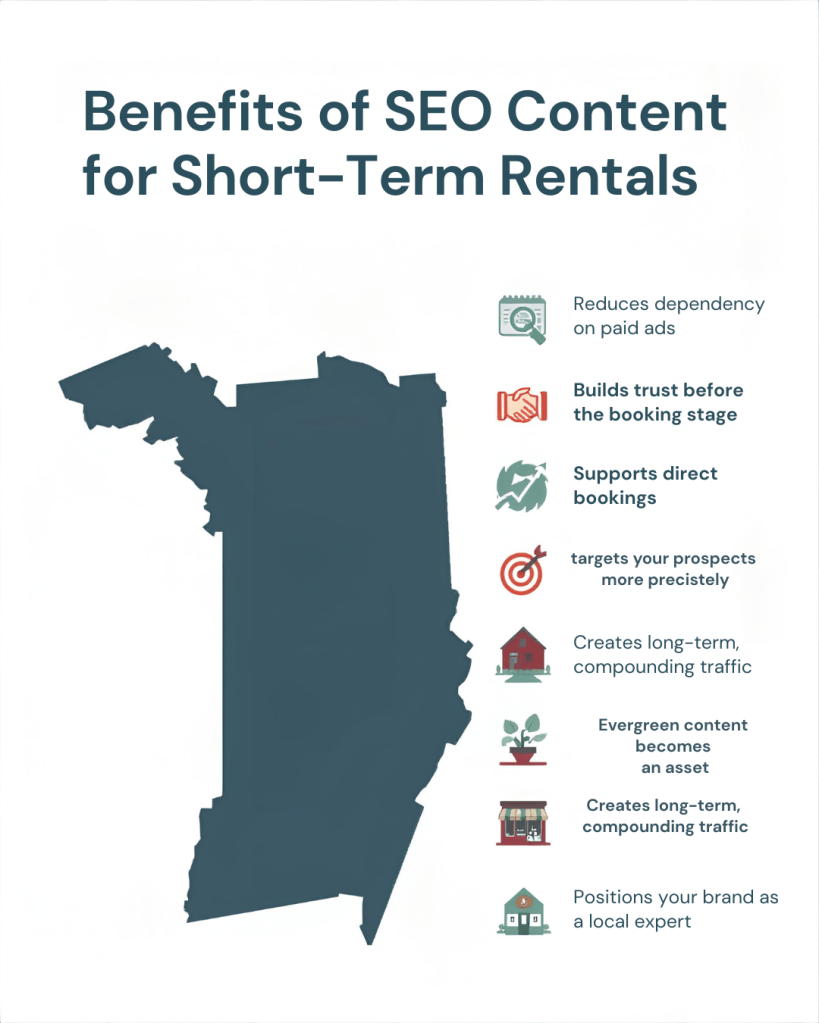
When done consistently, these posts don’t just fill a blog — they build trust, reduce OTA dependency, and turn your website into a booking asset.


 Small tourism brands face a unique challenge: competing against massive destinations, global travel platforms, and well-funded marketing teams — often with only a fraction of the resources. But a big budget is not the only way to succeed in your destination marketing content strategy.






























 Content and Coaching by Della