
 Small tourism brands face a unique challenge: competing against massive destinations, global travel platforms, and well-funded marketing teams — often with only a fraction of the resources. But a big budget is not the only way to succeed in your destination marketing content strategy.
With the right destination marketing content strategy, small tourism brands can attract high-intent travelers, build trust, and drive direct bookings — without relying entirely on paid ads or online travel agencies (OTAs).
This guide walks you through exactly how to build a high-performing content strategy for destination marketing, specifically designed for small tourism brands, local destinations, and short-term rental businesses.
What Is Destination Marketing Content Strategy?
A destination marketing content strategy is a structured plan for creating, publishing, and distributing content that attracts travelers, inspires trips, and converts site visitors into bookings. If content creation and content strategy mystify you, there are always tools and resources to help you get your footing. One of which is using AI for content creation, content strategy, or just to get ideas, according to The CEO Host.
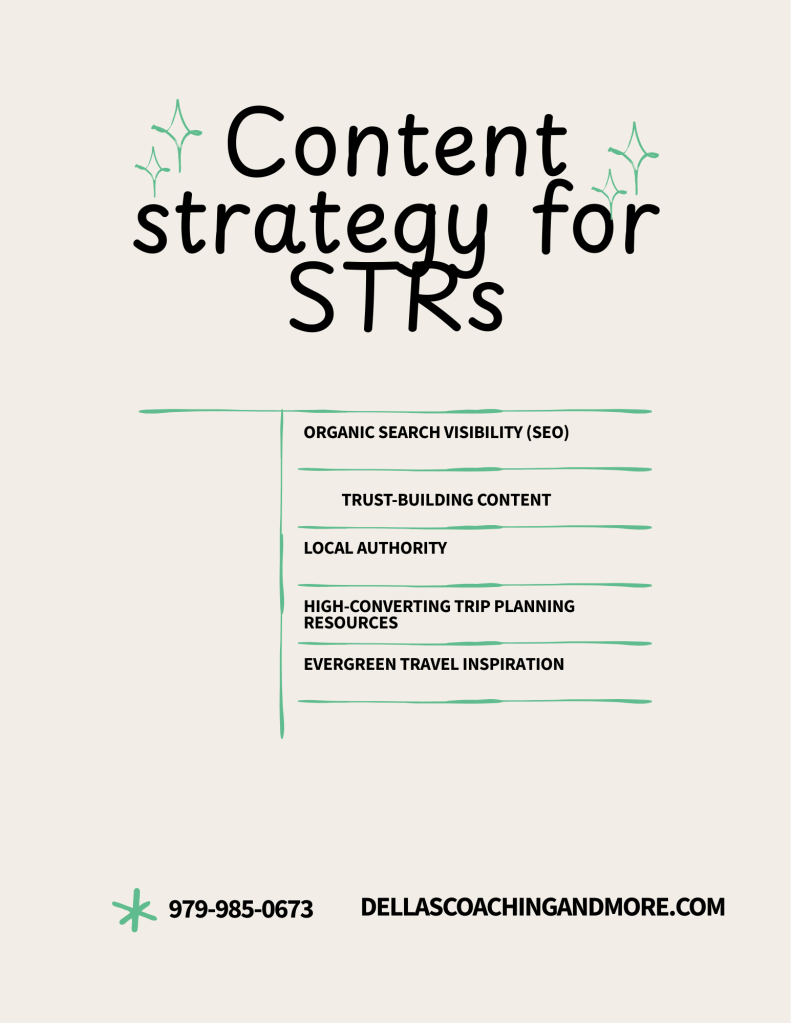
For small tourism brands, this strategy focuses on:
- Organic search visibility (SEO)
- Trust-building content
- Local authority
- High-converting trip planning resources
- Evergreen travel inspiration
Instead of pushing sales messaging, destination marketing content helps travelers discover your location, imagine their experience, and confidently plan their stay.
Why Small Tourism Brands Need a Content Strategy
Big destinations dominate paid advertising. Small brands win by owning niche intent and local knowledge.
A strategic content approach allows you to:
- Attract travelers actively planning trips
- Build credibility as a local expert
- Reduce dependence on OTAs
- Increase direct bookings
- Create long-term marketing assets
Most importantly, content compounds. One high-performing article can generate bookings for years.
Core Goals of a Destination Marketing Content Strategy
Before creating content, define your goals clearly.
1. Increase Destination Awareness
Help travelers discover your location and understand why it’s special.
2. Attract High-Intent Search Traffic
Capture searchers who are actively planning trips, not just browsing.
3. Build Trust and Authority
Position your brand as the local expert, not just another accommodation provider.
4. Drive Direct Bookings
Move travelers from inspiration → planning → booking without leaving your ecosystem.
The Destination Marketing Content Funnel
A strong content strategy supports travelers at every stage of their journey.
1. Inspiration Stage (Top of Funnel)
Goal: Spark interest and curiosity.
Content types:
- Travel inspiration guides
- Seasonal travel ideas
- Photo essays
- “Why visit” articles
Examples:
- Why the San Juan Islands Are Perfect for a Quiet Coastal Escape
- 10 Underrated Small Towns for Slow Travel in Washington
2. Planning Stage (Middle of Funnel)
Goal: Help travelers plan their trip.
Content types:
- Itineraries
- Packing lists
- Activity guides
- Transportation tips
- Restaurant recommendations
Examples:
- 3-Day San Juan Islands Itinerary for First-Time Visitors
- How to Get to Orcas Island: Ferry, Flights, and Tips
3. Booking Stage (Bottom of Funnel)
Goal: Convert visitors into guests.
Content types:
- Neighborhood guides
- Property comparisons
- Experience-driven landing pages
- Local stay recommendations
Examples:
- Where to Stay on Orcas Island for Couples
- Best Vacation Rentals Near Moran State Park
Content Pillars for Small Tourism Brands
To scale effectively, organize your content into clear pillars.
1. Destination Guides
Foundational content about your location.
Examples:
- Complete destination travel guides
- Seasonal travel tips
- Neighborhood breakdowns
2. Experience Content
Highlight what travelers can do, not just where they’ll stay.
Examples:
- Hiking guides
- Food & drink trails
- Adventure itineraries
- Wellness experiences
3. Local Insider Content
This is where small brands dominate.
Examples:
- Hidden gems
- Local events
- Resident tips
- Non-touristy experiences
4. Stay-Focused Content
Subtly drive bookings without hard selling.
Examples:
- Where to stay guides
- Trip planning resources
- Accommodation comparisons
SEO Strategy for Destination Marketing Content
SEO is the engine that powers long-term visibility. An SEO content marketing strategy is vital to the success of privately owned vacation rentals since you are competing with the larger brands, who are running ads and have more resources.
1. Target Search Intent, Not Just Keywords
Instead of focusing solely on volume, prioritize traveler intent.
Examples:
- “best time to visit san juan islands” → planning intent
- “things to do in Friday Harbor” → experience intent
- “orcas island vacation rentals” → booking intent
2. Build Topic Clusters
Create clusters of related articles around major topics.
Example cluster: San Juan Islands Travel Guide
- Best time to visit
- 3-day itinerary
- Top hikes
- Where to stay
- Getting there
This strengthens SEO authority and internal linking.
3. Prioritize Evergreen Content
Seasonal content is helpful — but evergreen content builds year-round traffic.
Focus on:
- Travel guides
- Planning resources
- Local tips
- Itineraries
Content Formats That Work Best for Tourism Brands
Different travelers consume content differently. Mix formats for maximum impact.
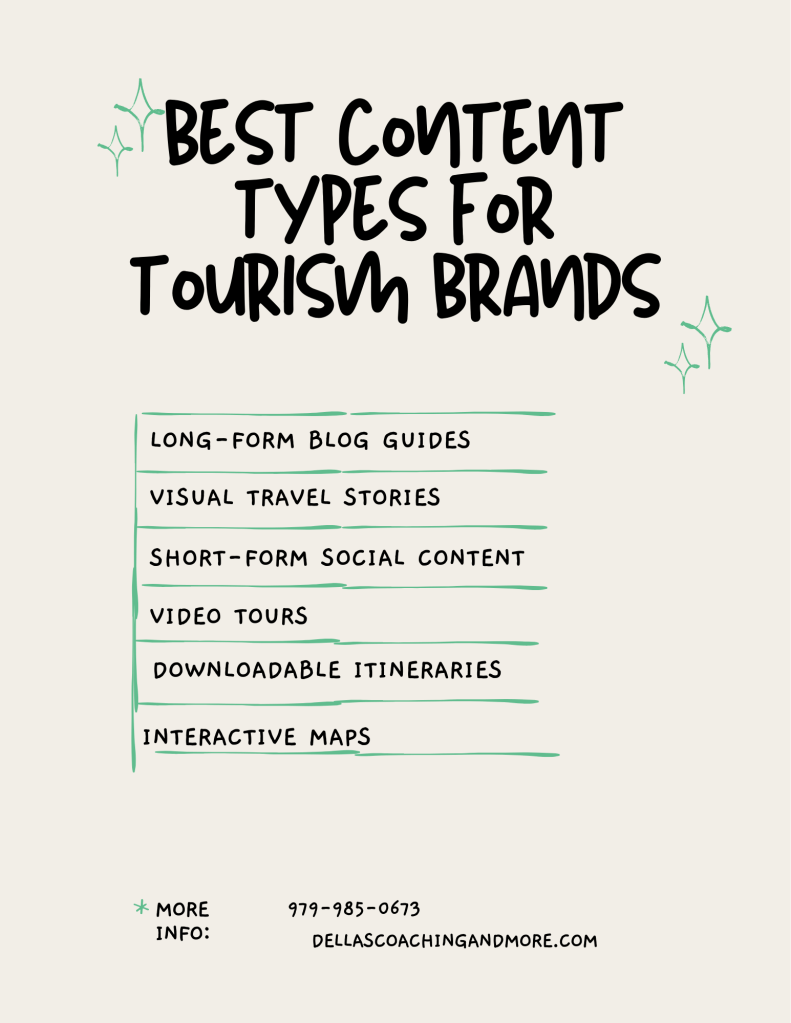
- Long-form blog guides
- Visual travel stories
- Short-form social content
- Video tours
- Downloadable itineraries
- Interactive maps
Distribution Strategy: How to Get Your Content Seen
Publishing alone is not enough.
1. Organic Search (Primary Channel)
SEO-driven content delivers consistent long-term traffic.
2. Pinterest
Extremely effective for:
- Itineraries
- Travel inspiration
- Visual travel planning
3. Email Marketing
Turn content into:
- Trip planning sequences
- Seasonal travel inspiration
- Local event alerts
4. Social Media
Repurpose blog content into:
- Carousels
- Reels
- Stories
- Short travel tips
How Often Should Small Tourism Brands Publish?
Quality always beats quantity.
Recommended pace:
- 2–4 high-quality posts per month
This allows you to:
- Maintain consistency
- Build topic authority
- Avoid burnout
Measuring Success: Key Metrics to Track
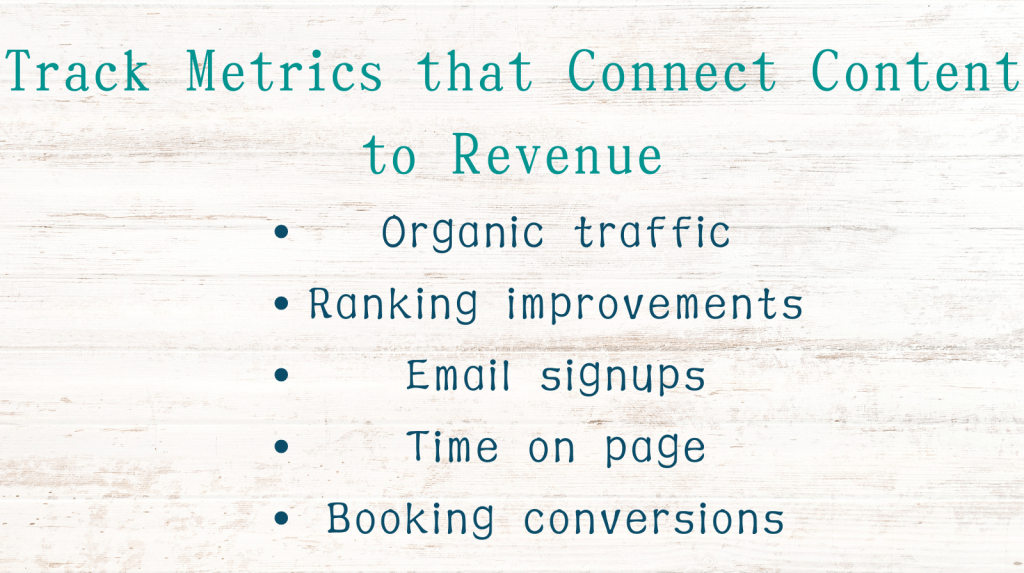
Track metrics that connect content to revenue.
- Organic traffic
- Ranking improvements
- Email signups
- Time on page
- Booking conversions
Pro tip: Track which content assists bookings, not just direct conversions.
Common Destination Content Mistakes to Avoid
- Writing generic travel content
- Copying competitor articles
- Ignoring SEO fundamentals
- Over-promoting accommodations
- Creating thin, low-value posts
Your advantage is local expertise — use it.
Final Thoughts: Why Content Is the Greatest Asset for Small Tourism Brands
Destination marketing content allows small tourism brands to:
- Compete with major destinations
- Build lasting visibility
- Create traveler trust
- Drive consistent direct bookings
With the right strategy, your content becomes a 24/7 sales engine, working year-round to attract, inspire, and convert travelers.
 Content and Coaching by Della